

September 20266 min read
How Digital Twins Are Changing Data Center Technology
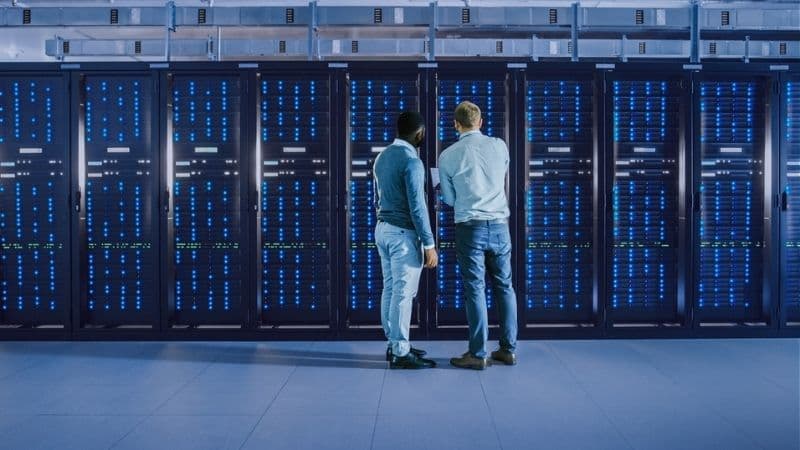
Digital twins in data centers are moving from a specialist design tool to a bigger part of how AI infrastructure is planned, tested and operated. As data centers become denser and more complex, technology teams need better ways to understand how compute, power, cooling and controls will behave before changes are made to the physical environment.
At Glocomms, we are seeing technology hiring move in the same direction. Employers increasingly need people who can work across software, infrastructure, data and physical systems, rather than operating within one narrow technology function.
What is a digital twin?
A digital twin is a virtual model of a physical system. In a data center, that can mean creating a digital version of the facility that represents equipment, power systems, cooling, controls and other infrastructure.
The difference between a digital twin and a static diagram is that the model can use real system data and simulation to show how the physical environment may behave. Teams can use it to test changes, model different configurations and identify potential problems before making expensive changes on site.
For example, an operator could model what happens to cooling and power demand when a new high-density AI cluster is added to a data hall. Instead of relying only on spreadsheets and separate engineering tools, teams can see how different systems interact within one virtual environment.
Why are digital twins becoming more important for data centers?
AI is increasing the complexity of data center infrastructure. Higher-density GPU systems place greater demands on power and cooling, while new hardware generations can change infrastructure requirements quickly.
Traditional data center planning often involves separate teams working across power, cooling, IT and controls. That can create gaps between design decisions and what happens once equipment is deployed.
In 2026, NVIDIA released its Omniverse DSX Blueprint, designed to support digital twins for large-scale AI factory design and simulation. Companies including Schneider Electric, Siemens, Vertiv, Eaton and Cadence are contributing technology and infrastructure models to the initiative.
This points to a wider shift in data center technology. Physical infrastructure is increasingly being modeled and tested in software before it is built or changed.
Data center design is becoming more software-driven
One of the main benefits of digital twins is the ability to test infrastructure decisions earlier. Power capacity, cooling performance and equipment layouts can all affect how much compute a data center can support. A problem discovered during construction or deployment can be costly to correct. Simulation gives engineering and technology teams another way to identify those issues before they reach the physical site.
Vertiv is developing a production-grade digital twin capability for AI infrastructure that brings power, cooling, controls and deployment into a shared model. The company says this approach can help reduce late-stage design changes and improve coordination between teams.
For technology professionals, this means infrastructure planning is becoming less separated from software. Data, simulation, automation and physical engineering increasingly need to work together.
Digital twins could also change data center operations
The potential use of digital twins does not stop when construction is complete. The same models can increasingly support day-to-day operations.
Data centers generate large amounts of information from sensors, power systems, cooling equipment, network infrastructure and monitoring platforms. Connecting that operational data to a digital model can give teams a better view of how the facility is performing.
A digital twin could help teams model capacity before new equipment is deployed, test the impact of a cooling change or identify where infrastructure is operating close to its limits. Vertiv says digital twins are developing from basic capacity-planning tools into more dynamic simulation platforms for AI-intensive facilities.
Schneider Electric and NVIDIA are also developing digital twin architectures designed to support the design, simulation, operation and maintenance of large AI data centers. Schneider Electric is also exploring how AI could contribute to increasingly software-defined data center operations.
What does this mean for technology professionals?
Digital twins bring several technology disciplines closer together. Building and operating these environments requires more than knowledge of physical data center infrastructure.
Teams need people who understand how infrastructure data is collected, connected, analyzed and used to make decisions. That creates opportunities for professionals working across:
- Infrastructure automation
- Cloud and platform engineering
- Data engineering
- Software engineering
- Systems integration
- IoT and telemetry
- Simulation and modeling
- AI and machine learning
The strongest profiles are likely to be people who can understand the relationship between software and the physical systems underneath it.
A data engineer, for example, may need to work with operational data from cooling and power infrastructure. A platform engineer may need to connect simulation tools with wider infrastructure platforms. Software engineers may work on applications that allow operators to visualize and interact with digital models.
What Glocomms is seeing in the talent market
At Glocomms, we are seeing growing demand for data center technology talent that can work across traditional technical boundaries. Data center technology is becoming increasingly interconnected, with cloud, networking, software and infrastructure teams working more closely together as environments become more complex and compute-intensive.
This is already reflected in the roles we support across the market. Current opportunities include platform engineers working across cloud infrastructure and senior cloud engineers supporting large-scale GPU and high-performance computing environments. Employers are placing greater value on professionals who understand how software, compute and infrastructure interact rather than operating within one technical discipline alone.
The same crossover is becoming more important between IT and operational technology. Glocomms supports hiring across cloud, infrastructure and network security, including roles connected to GPU-intensive environments, SCADA and industrial control systems. As digital twins become more widely used across data centers, employers will increasingly need people who can work with software platforms while also understanding the data produced by power, cooling, controls and other physical infrastructure.
The skills gap may sit between technology disciplines
One of the harder hiring challenges is likely to be finding candidates who understand more than one part of this environment.
Glocomms is already seeing this problem across AI infrastructure. In our research into AI infrastructure and connectivity talent, our consultants highlighted a gap between professionals with traditional infrastructure experience and those with AI expertise.
Digital twins create a similar challenge. A company may find strong software engineers, data engineers or infrastructure specialists, but fewer professionals who understand how those disciplines connect inside a physical data center.
For employers, this may mean looking beyond exact job titles. Candidates from industrial technology, high-performance computing, cloud infrastructure, simulation, automation and operational technology may bring transferable skills that apply to digital twin environments.
Digital twins are changing what a data center technology team looks like
Data centers are becoming increasingly software-managed physical systems. Facilities still depend on servers, networks, power and cooling, but the way those systems are designed and operated is becoming more connected to simulation, data and automation.
Digital twins are one example of that shift. They give teams a way to model infrastructure before making physical changes and can help operators understand performance across the life of a facility.
For technology employers, this creates a different hiring requirement. Building digital twin capability may require teams that can connect software, infrastructure, operational data and physical systems, rather than hiring each discipline in isolation.
Glocomms works with organizations across cloud and infrastructure, software, data, cybersecurity and emerging technology to identify professionals who can operate across these connected environments. If digital twin technology, AI infrastructure or data center modernization is changing the skills your team needs, request a call back from Glocomms to discuss your hiring requirements and the talent available in the market.
Request Talent
Request a call back and one of our experienced consultants will get in touch to discuss your hiring requirements.
Advancing your career
Want to be one step ahead in your career? Our industry experts have the relationships and global reach to realize your full potential.